
Not every clog is in a sink. When the problem is in the main sewer line, the whole house is affected. This guide explains the signs of a sewer line clog, what to do right away and how plumbers clear and, when needed, repair the pipe.
Signs the clog is in the main line
- Several fixtures drain slowly at once
- Toilets gurgle when the washer drains
- A basement floor drain backs up or smells
- Water in the tub rises when you flush
- A bubbling sound in drains far from the problem
One slow sink is a branch clog. Several affected fixtures, especially the lowest in the house, point to the main.
What to do first
- 1
Stop using water
Every flush or load of laundry adds to the backup.
- 2
Locate the cleanout
A capped pipe in the basement or yard gives access.
- 3
Do not use chemical cleaners
They rarely reach the clog and they are hazardous to plumbers.
- 4
Protect the area
Move items off the floor and keep children away.
- 5
Call a plumber
Describe which fixtures are affected.
Common causes
| Cause | Clue | Fix |
|---|---|---|
| Tree roots | Recurring clogs, worse after rain | Cut and jet, consider repair |
| Grease | Kitchen first | Cable and jet |
| Flushed items | Sudden complete blockage | Retrieve with cable |
| Sagging pipe | Same spot every time | Camera, repair |
| Collapsed pipe | Cable stops | Repair or replace |
Backup now?
Call the 24/7 line. We send a plumber and explain what to expect.
Clearing the clog
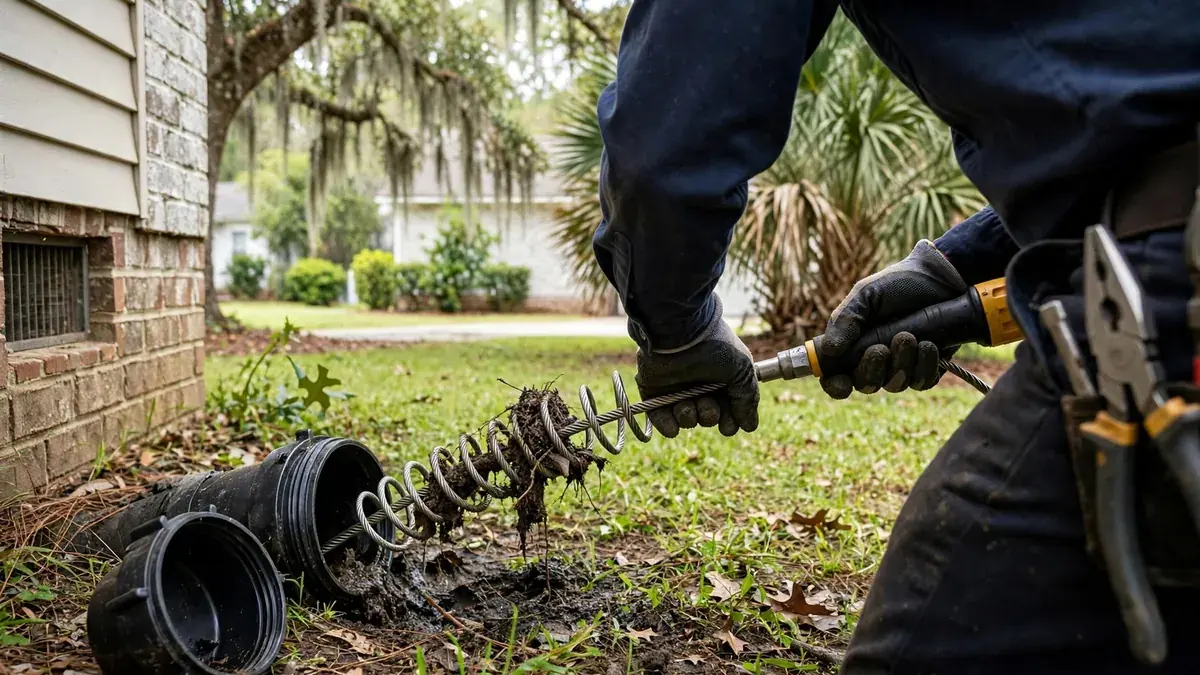
A drum machine feeds a cable from the cleanout into the line. The cable has a cutting head for roots or a retrieving head for objects. A camera confirms what came out and whether the pipe is sound.
If the pipe is damaged, repair is the next step. Options include spot digging, lining and bursting. Our sewer line repair page describes them.
Preventing the next clog
- Never flush wipes, even those labeled flushable
- Keep grease out of the drain
- Install a cleanout if you do not have one
- Control tree roots near the lateral
- Ask for a camera inspection after repeat clogs
What a camera finding means for your wallet
A camera view turns the next decision into a choice between clear cost paths. A clean pipe with only grease means a cleaning and a schedule. Roots at joints mean cutting, jetting and probably lining within a few years. A break or collapse means a repair now.
The cheapest option today is not always the cheapest across five years. A line that needs cabling twice a year is costing you real money, plus the risk of a flood. A lined or replaced line may pay for itself.
Preparing for the plumber
- 1
Clear the path
Move stored items away from the cleanout and floor drains.
- 2
Leave water off
Do not run fixtures until the plumber arrives.
- 3
Note the history
Dates of previous clogs and what was done help.
- 4
Secure pets
Machines are loud and the work area is messy.
- 5
Plan for access
Tell us about gates, steps and stairs.
After the visit, ask for the camera footage and a written note of what was found. That record helps if you sell the house.
How the cleanout helps
A cleanout is a capped pipe that gives direct access to the main drain. Without one, a plumber has to enter through a toilet or a roof vent, which takes longer and risks damage to the fixture. If your home does not have a cleanout, installing one is a modest project that pays off the next time the line backs up.
Keep the cap accessible. A cleanout buried under a pile of storage costs minutes when minutes matter.
Costs of waiting
A partial blockage never gets better by itself. Each week the buildup grows, and the day it fails completely is usually a holiday or the middle of the night. Sewage on a finished basement floor brings cleanup, drying and possible mold work that dwarfs the cost of a scheduled cleaning. If you see the early signs, book the visit.
Photograph the first signs, such as a bubbling drain or a slow tub, and note the date. A record helps us pin down the cause.
If you are selling, a clean camera report is a selling point. If you are buying, a bad one is a negotiating point.
What to know in Savage
Minnesota's Gopher State One Call service, reached by dialing 811, is free and requires at least 48 hours notice before excavating, not counting weekends and holidays. If a sewer clog leads to a dig, call first.
The City of Savage's utilities division and the homeowner share responsibility for the sewer system. Ask City of Savage Utility Services where the city main ends and your lateral begins. The state Department of Labor and Industry offers a license lookup for plumbers.
Source type: State public safety page, city utility office and state agency page
Code and sources
Under the Minnesota Department of Labor and Industry, the governing standard is Minnesota Rules chapter 4714, built on the 2018 Uniform Plumbing Code with state amendments. This page is general information, not a code review of your home, and your city building department answers permit questions.
A note on insurance
Standard homeowner policies often exclude sewer backup unless you have an endorsement. If a backup damaged your floors, call your insurer promptly and take photos. Save any camera footage. It can support a claim.
We clear and repair lines across Savage, including neighbors near Burnsville and Prior Lake. For a quick look at what is in your pipe, see sewer inspection.
Questions Savage homeowners ask
Not always. A vent problem can do it too. If several fixtures are affected, suspect the main.
Rental machines exist, but they are heavy and risky. A plumber also checks the pipe.
Clogs that return and a camera view of roots at joints confirm it.
Typically the homeowner owns the lateral. Ask the City of Savage utility office.
Only with an endorsement in many policies.
Still have a question about your situation? The line is open around the clock. Call (952) 866-9120