
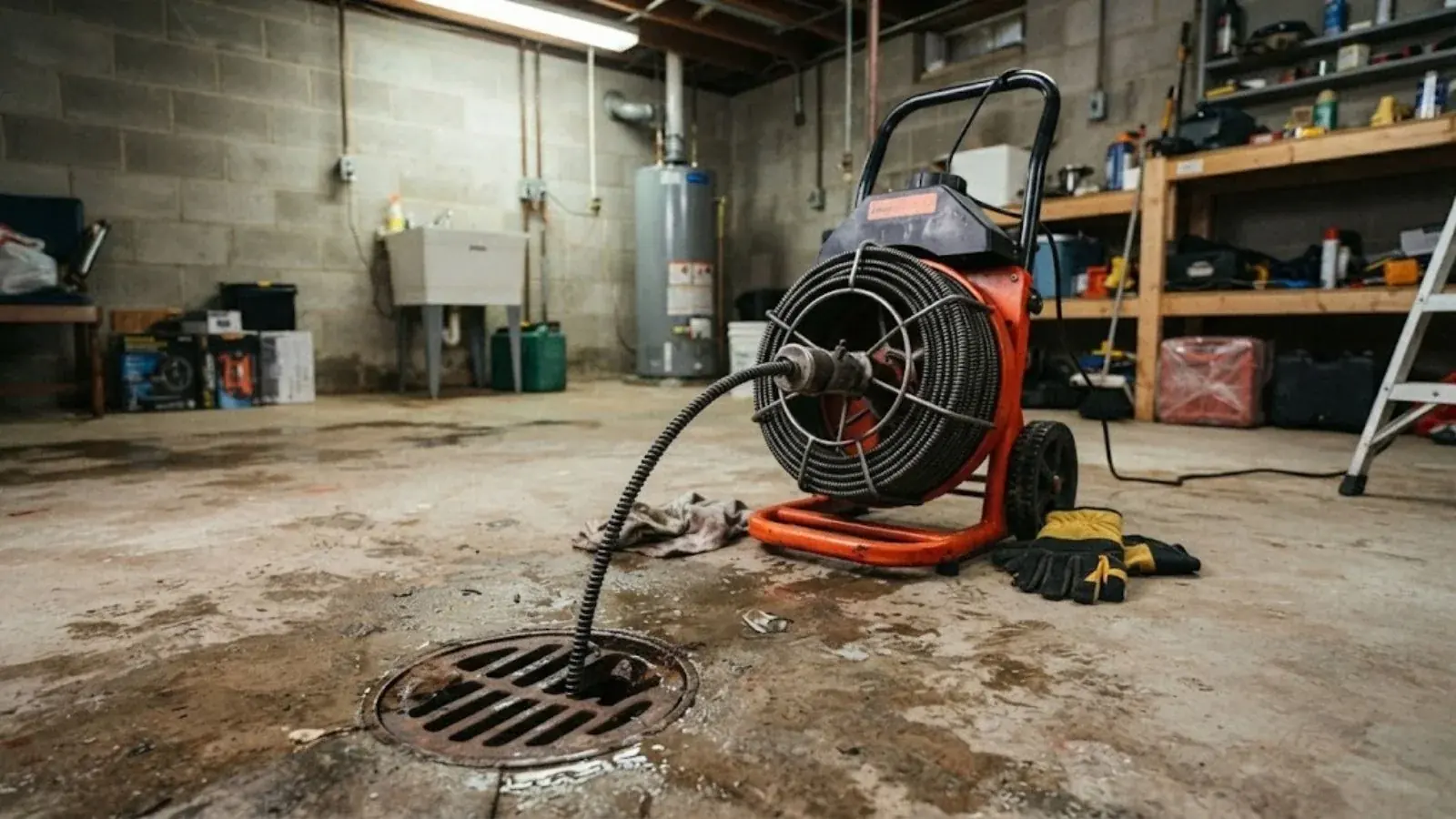
A drain that holds water, gurgles or backs up into the tub is a problem that gets worse by the hour. We run 24/7 for clogged drains in Savage, and same-day appointments are often available. If a floor drain is overflowing, stop running water in the house and leave the washer and dishwasher off.
For a single clogged sink, a bucket and a few minutes of patience are enough to wait for us. For several fixtures at once, the clog is likely in the main line and every flush adds to the mess.
Drain backup: what to do first
- Stop using water. Every flush or load of laundry sends more down a blocked line.
- Check whether one fixture or many are slow. Many slow fixtures point to the main drain.
- Keep chemical drain openers out of the pipe. They can splash, and they leave caustic water for the plumber to work around.
- Move rugs and stored boxes away from basement floor drains.
- Call the 24/7 line and describe which drains are affected.
Sewage that rises in a basement floor drain is a health issue. Keep children and pets out, and open a window if the smell is strong.
Matching the tool to the clog
| Problem | Likely tool | Why |
|---|---|---|
| Hair and soap in a tub or sink | Hand auger or small cable | Pulls the blockage out of the trap and branch |
| Grease and food in a kitchen line | Cable with a cutting head, or jetting | Scrapes the pipe wall, not just a hole through it |
| Tree roots in the main | Root-cutting cable, then jetting | Cuts and flushes the roots out |
| Repeat clogs in the same spot | Camera inspection | Shows a sag, a crack or a bad joint |
A cable that only pokes a hole through a clog gives you a few good days and a repeat call. We pull the cable back, look at what came out, and say plainly whether the pipe needs more than cleaning.
Water not going down?
Call the 24/7 line. We ask a few questions, then send a plumber.
Why Savage drains clog
Savage's water arrives hard, mostly through Burnsville's supply, and Burnsville reports 25 to 26 grains per gallon. Hard water leaves a mineral film inside pipes that catches grease, soap and hair faster than soft water does. Many homes here also have laundry and kitchen lines that run to a single main under the slab or basement floor.
Homes near mature trees, including the older blocks around the Hamilton District and downtown along Highway 13, are more likely to have roots in clay or cast iron service lines. Newer plastic drains in the subdivisions off County Road 42 tend to clog from grease, wipes and flushed items rather than roots.
How a drain cleaning visit goes
- 1
Isolate the clog
We run water, listen and trace which branch is blocked, so we do not cable the wrong line.
- 2
Clear it
A hand auger, drum machine or sectional cable goes in through the cleanout, trap or vent as the pipe allows.
- 3
Test the flow
We run water through the fixture and the lines it joins until the drain runs freely.
- 4
Report back
If we pulled roots, scale or a collapsed section's debris, we tell you and show you a camera view if you want one.
Snaking and cabling a drain
A drain cable is a rotating steel line that bores through a clog or hooks it so it can be pulled out. It is the right tool for a soft blockage in a sink, tub or branch line. It is a poor tool for scale, heavy grease or roots that regrow, because it opens a hole through the mess rather than cleaning the pipe wall.
If a drain was cabled and clogged again in a few weeks, the pipe wall is probably still coated. That is the point where hydro jetting or a camera look makes more sense than another pass with the cable.
Kitchen sink drain clogs
Kitchen drains clog differently from bathroom drains. Grease cools inside the pipe and traps food, and a disposal can push a lot of that debris down in one go. The clog often sits at the trap or in the horizontal run under the floor.
Stop running water into a sink that is backing up, and do not mix chemical cleaners, because they can burn skin and damage pipes. If a disposal is involved, see our garbage disposal repair page. Otherwise call and we explain what we would check first.
Cost and what changes it
A simple trap clear and a main line job with roots are different visits. We give a clear price before work starts so you can compare apples to apples.
Homeowner insurance seldom pays to clear an ordinary clog. Some policies cover sewer backup damage only with an added endorsement, so check yours.
Keep drains clear between visits
Wipes marked flushable still do not break down. Grease belongs in a can, not the sink. A hair catcher in the tub drain costs a few dollars and prevents the most common bathroom clog. If a drain slows again within a few weeks, ask us to look with a camera before you buy another bottle of cleaner.
For bigger jobs we can move up to sewer line cleaning, and for root-choked lines we often recommend hydro jetting. Neighbors in Prior Lake and across the river call us for the same reasons.
Code and sources
According to the Minnesota Department of Labor and Industry, plumbing work in the state follows Minnesota Rules chapter 4714, which incorporates the 2018 Uniform Plumbing Code with Minnesota amendments. Rules for permits and inspections vary by city, so ask your city's building department what your project needs.
Common questions
Yes. Our line is open 24/7 and we offer same-day visits when we can. For a backup into a basement we prioritize the call and tell you how to limit the mess while we travel.
We advise against it. The chemicals can burn skin, damage old pipes and make the plumber's job riskier. A plunger is a safer first move.
Often the cleaning only opened a hole. Scale, roots or a sagging pipe let the clog rebuild. A camera view tells you whether the line needs more.
Yes. See our sewer line cleaning page for main lines, floor drains and backups.
A long-standing clog can strain joints and cause leaks. Clearing it early is cheaper than repairing the pipe later.
Still have a question about your situation? The line is open around the clock. Call (952) 866-9120