
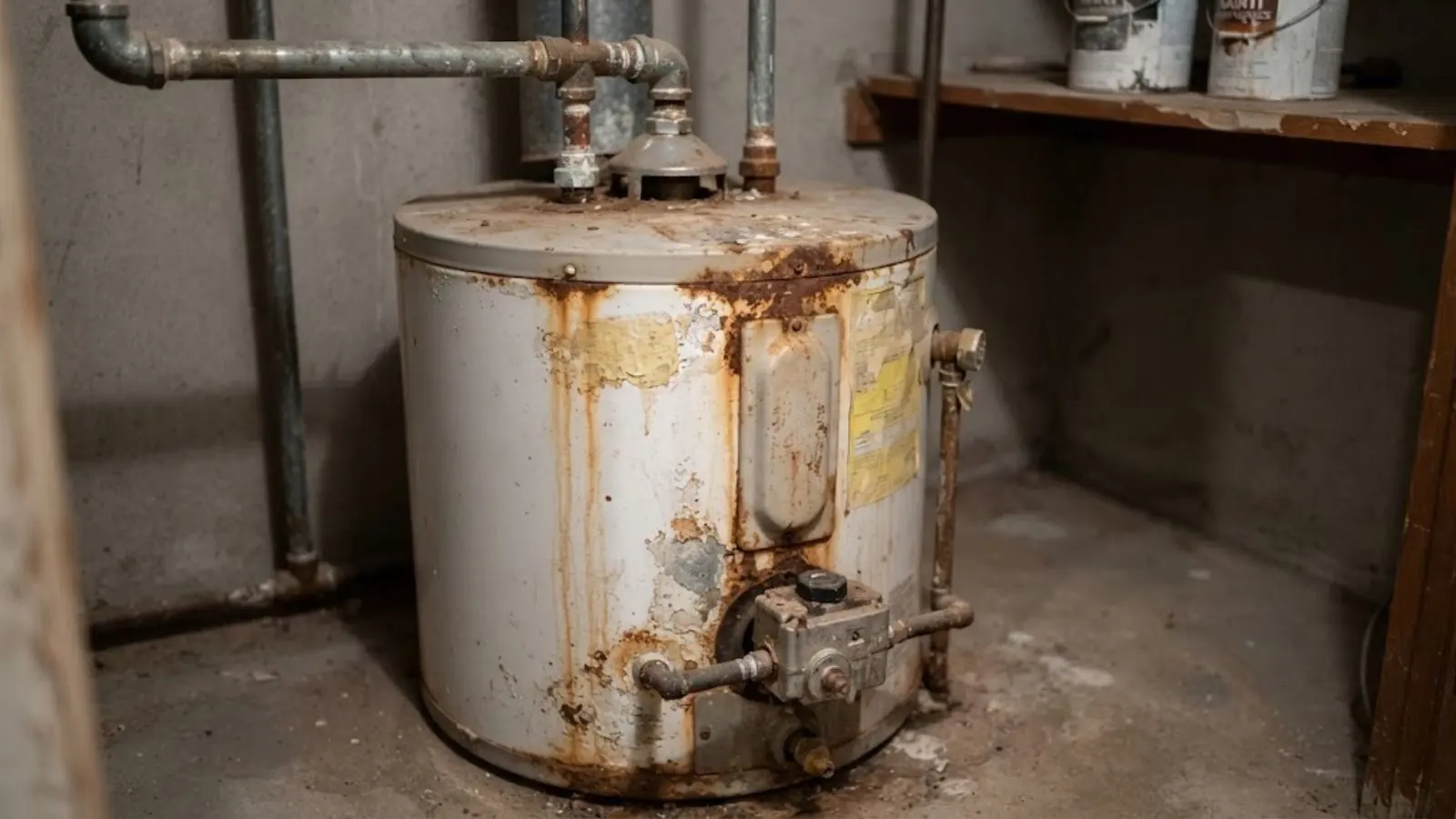
A water heater that is leaking from the base, rumbling like a kettle or sending out rusty water has usually reached the end of its life. We answer the line 24/7 for exactly this call, and replacement in Savage is often possible the same day when a matching unit is on the truck or at a local supplier.
While you wait, find the cold water shutoff valve on the pipe above the tank and turn it clockwise until it stops. If the heater is electric, switch off its breaker. If it is gas, turn the gas control knob to the off or pilot position. Then put a bucket or a wet vac under any drip.
When a water heater failure is an emergency
A slow weep at a fitting can wait for a morning appointment. A steady stream, a tank that is hot to the touch and hissing, or water spreading toward a finished basement cannot. Water on the floor near a gas unit or an electrical panel is the one case where you should stay clear and call us from another room.
- Water pooling around the base of the tank, not just damp pipes above it
- Rusty or brown hot water that clears when you run only the cold tap
- A tank older than about a decade that has started popping, banging or whistling
- No hot water and a pilot or igniter that has been replaced once already
After hours, we handle the shutoff walk-through by phone first. That keeps the damage from growing while a plumber drives out, and it lets us bring the right size and fuel type the first time.
Repair or replace: how we help you decide
A new thermocouple or heating element is cheap next to a new tank. A tank that has rusted through is not repairable at any price. We check the age on the data plate, the condition of the anode rod, the shutoff valves and the venting before we recommend anything.
| Situation | What it usually means | Our usual advice |
|---|---|---|
| Leak at the base of the tank | The steel tank itself has failed | Replace |
| Leak at a fitting or relief valve | A part has worn out | Repair, if the tank is sound |
| No hot water, tank under ten years old | Often an element, thermostat or igniter | Repair first |
| Tank past twelve years with repeat repairs | Parts keep failing in sequence | Replace |
| Sediment rumble and short hot water supply | Mineral buildup on the tank floor | Flush if young, replace if old |
Water heater down right now?
Call the 24/7 line and we start with shutoff steps, then book the swap.
What a replacement visit includes
- 1
Confirm the fit
We measure the closet or basement corner, note the fuel, the vent route and the water line layout, and match capacity to your household.
- 2
Drain and disconnect
The old tank is shut off, drained to a floor drain or hose line, and disconnected from water, gas or power, and the vent.
- 3
Set the new unit
We set the tank level, connect new flex lines, a fresh relief valve and discharge pipe, and a drain pan where space allows.
- 4
Test and explain
We fill the tank, purge air, light or power the unit, check for leaks and combustion draft, and show you the shutoff and temperature setting.
- 5
Haul away
The old heater leaves with us. You are not left with a rusted tank in the garage.
Hard water and Savage tanks
The City of Savage buys about 71.5 percent of its distributed water from Burnsville, and Burnsville's own water report puts its hardness at 25 to 26 grains per gallon. Savage's report does not list a hardness figure, so test your tap or ask City of Savage Utility Services what your address receives.
Hard water leaves scale on the bottom of a tank and around the heating elements. That scale is why many local tanks get noisy and lose capacity before the steel itself gives out. A water softener upstream of the heater cuts that buildup, and we mention it only when the numbers support it.
What decides the price
Replacement cost swings with the unit you choose and the work around it. We quote the whole job before work starts, so you see one number.
Home insurance often covers sudden water damage from a failed tank but rarely the tank itself. Ask your carrier before you throw out soaked drywall.
Related work you may need
If you want a planned upgrade rather than a rush swap, our water heater installation page covers sizing and layout. Homeowners weighing endless hot water can read about a tankless water heater before deciding.
If the swap is part of a bathroom or basement remodel, our plumbing installation team can coordinate the rough-in. We serve homes in Savage and nearby, including addresses we reach from Burnsville, and we confirm the local details when you call.
Code and sources
Under the Minnesota Department of Labor and Industry, the governing standard is Minnesota Rules chapter 4714, built on the 2018 Uniform Plumbing Code with state amendments. This page is general information, not a code review of your home, and your city building department answers permit questions.
Common questions
Yes. The line is staffed 24/7. We talk you through the shutoff steps first, then book the earliest visit we can offer, and same-day appointments are available when schedules and parts allow.
Most standard tank swaps take a few hours once the new unit is on site. Moving a vent, adding a gas line or fixing old valves can stretch the visit.
Yes. Hauling away the old tank is part of the job.
If the leak is from the tank body, no. If the problem is a part and the tank is young, repair often makes sense. We tell you which case you are in.
Only if your household needs it. A larger tank costs more to heat and fit. We size by the number of people, bathrooms and simultaneous showers.
Still have a question about your situation? The line is open around the clock. Call (952) 866-9120