
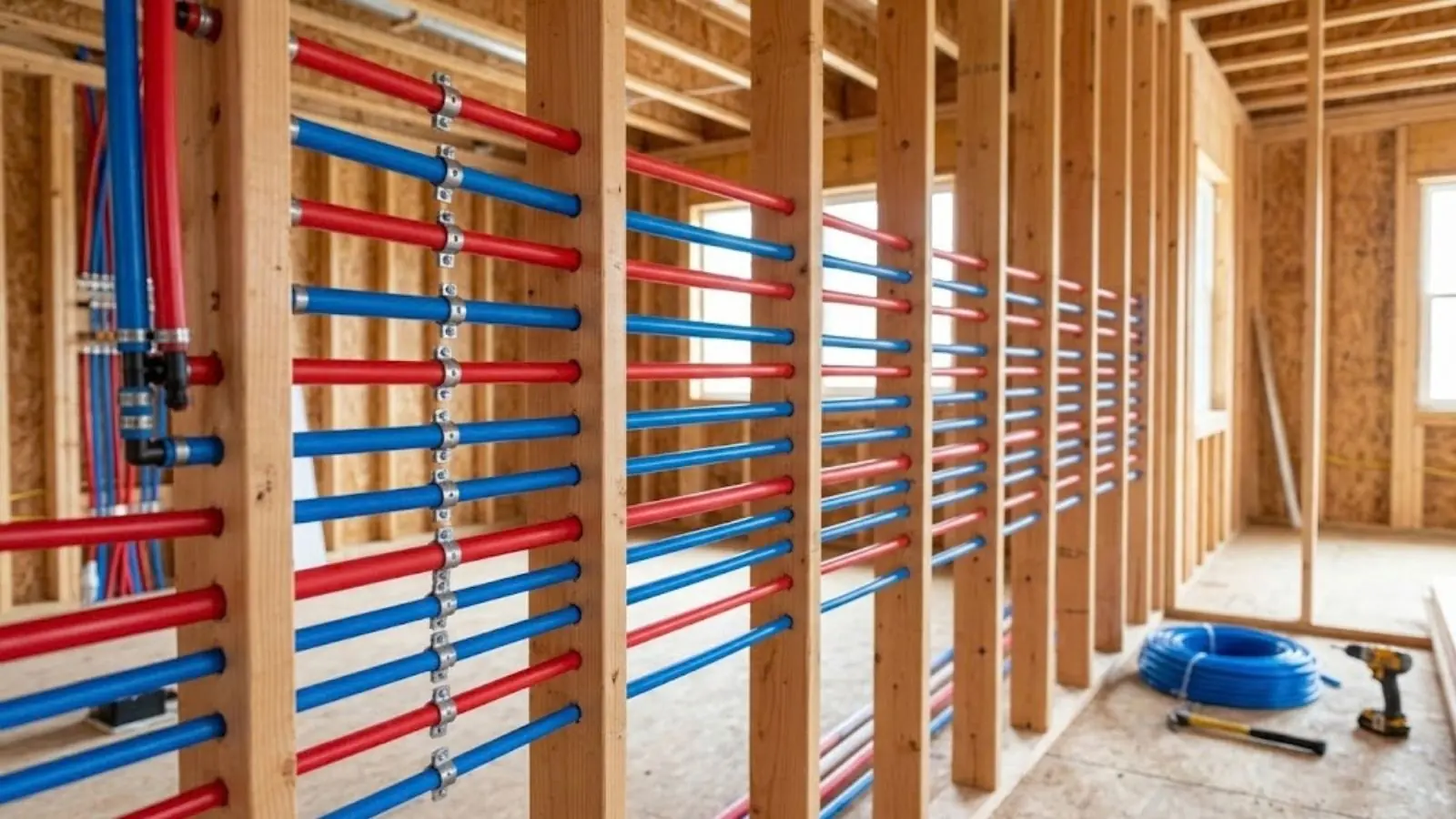
Repiping replaces the supply lines that carry water through a home. It is a planned project for pipes that keep failing, not an emergency fix. If a pipe has burst, see our emergency burst pipe page first and come back here once the water is off.
Signs your pipes may be due
- Repeated pinhole leaks in copper
- Brown or rusty water from the tap, especially in the morning
- Low pressure that gets worse with time
- Galvanized steel pipe, which corrodes from the inside
- Polybutylene pipe, a grey plastic used in some older homes and known for failures
One leak is a repair. Three leaks in a year in different places is a pattern, and chasing them with patches costs more than a plan.
Pipe materials and what to expect
| Material | Strengths | Watch for |
|---|---|---|
| PEX | Flexible, fewer fittings, fast to install | Keep out of direct sunlight, follow manufacturer rules |
| Copper | Long record, rigid, heat tolerant | Cost, and pinholes in some water chemistry |
| CPVC | Lower material cost | Can become brittle with age |
| Galvanized steel (existing) | Common in older homes | Corrodes inside, restricts flow |
| Polybutylene (existing) | Found in some homes of a certain era | Known for failures, replace |
Pipes failing again?
Call and we survey the system and plan a repipe.
How a repipe goes
- 1
Survey
We locate the main shutoff, trace the lines, note fixtures and identify the pipe material.
- 2
Plan access
We choose routes through the basement, crawl space or walls with the least opening.
- 3
Phase the work
Often the home keeps partial service while we work. We tell you when water is off.
- 4
Test and restore
We pressure-test the new lines and leave the home ready for drywall repair by a finish contractor.
Drywall repair and painting are separate trades. We open walls only as needed and we mark each access point so the finish crew knows what to do.
What Savage homeowners should check
The City of Savage's recent lead and copper sampling found 0 of 32 homes above the action level, with next testing due in 2027. That tells you about the city's system at the tap, not about your plumbing. If your home has old lead-soldered copper, galvanized pipe or an unknown service line, a repipe is the time to deal with it.
Savage's supply is also hard, drawn largely from Burnsville at a reported 25 to 26 grains per gallon, and mineral buildup speeds corrosion in some pipes. A water softener plan can be part of a repipe project.
What to ask before you sign a repipe contract
- Which pipe material is quoted, and why that one for this house?
- How many access openings will be cut, and where?
- How long will water be off each day?
- Who closes the walls and paints?
- Is the main shutoff valve replaced as part of the work?
- What does the warranty cover on pipe, fittings and labor?
We answer these in writing. A repipe is a once-in-decades job, and a clear scope up front prevents the unpleasant surprises that make people regret it.
Staying in the house during the work
Most households stay home during a repipe. We set up so one bathroom and the kitchen sink have water for most of each day, and we tell you in advance when the supply is off. Keep a few jugs of drinking water and plan showers around the schedule. If someone in the home needs steady water for medical reasons, tell us at the survey so we plan the sequence around it.
Cost factors
A repipe is a significant project, priced after we survey. Here is what drives it.
Homeowner insurance usually covers resulting water damage from a sudden leak, not the cost of replacing worn pipe.
If a service line to the street is the problem, see water service line repair. For one-off troubles use leak detection, and for new fixtures that go in with the walls open, see plumbing installation. We serve Savage and Burnsville homes.
Code and sources
Minnesota Rules chapter 4714 is the state plumbing code and the standard a licensed plumber works to. The Department of Labor and Industry states that it incorporates the 2018 Uniform Plumbing Code with Minnesota amendments. Your city building department decides when a permit or inspection is needed, so check with them before work begins.
Common questions
Often a few days for an average home. We give a timeline with the quote.
Usually water is off for part of each day. We plan around your schedule.
Not always. Sometimes a section or a floor is enough.
Both work. We explain the trade-offs for your home and your water.
We open as little as we can. Finish carpentry is a separate trade.
Still have a question about your situation? The line is open around the clock. Call (952) 866-9120