
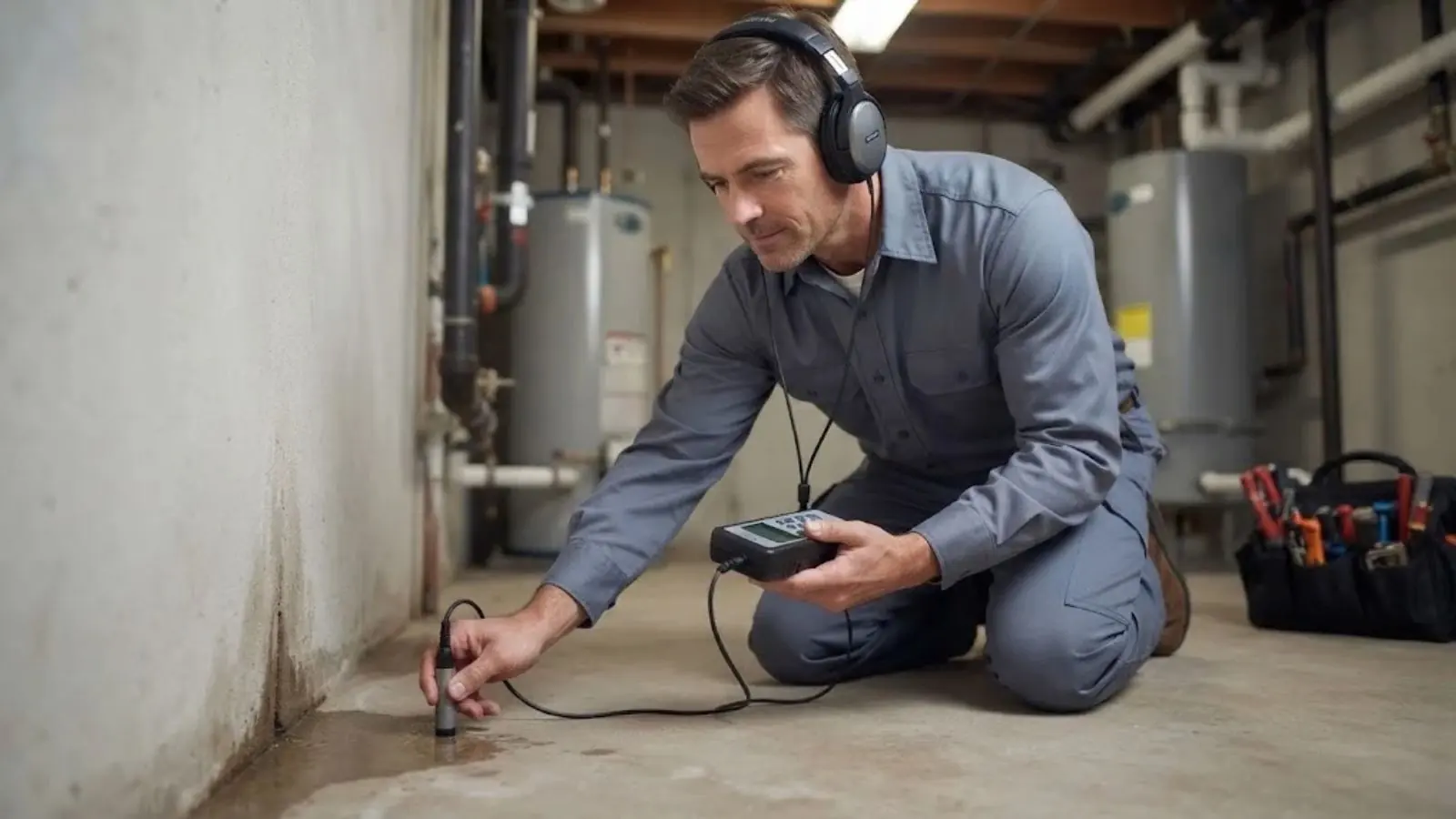
A leak you cannot see is still a leak. We find hidden leaks in Savage homes, and we answer 24/7 when water is already damaging walls or ceilings. Shut off the main water valve if you see active water, keep power away from wet areas and call us for the same-day visit when schedules allow.
Not every leak is dramatic. A toilet that runs on, a stain that grows slowly or a bill that keeps climbing can each point to a pipe that is losing water somewhere out of sight.
When a hidden leak is an emergency
Water through a ceiling, a wall that is wet to the touch or a floor that feels warm where it should not are urgent signs. So is a basement that suddenly smells of damp. Act quickly, because wet drywall and subfloor can grow mold in days.
- Water dripping from a light fixture or ceiling: turn off power to that area at the breaker first
- A section of floor that is warm or soft
- The sound of running water when every fixture is off
- A water meter that spins when nothing is in use
- A sudden drop in water pressure
The meter test: start with a number
Many leak calls start with a high bill. Turn off every fixture, find the meter and watch the small dial or flow indicator. If it moves, water is going somewhere. Then close the main valve inside the house and look again. If the meter stops, the leak is in the house. If it keeps moving, the leak is in the line between the meter and the house.
Savage homes get a utility bill from the City of Savage. A reading that jumps without a change in habits is worth chasing early. We combine that figure with a physical search so we know where to look.
| Location | Typical clue | Usual cause |
|---|---|---|
| Ceiling below a bathroom | Brown stain, sagging paint | Drain or supply leak above |
| Wall behind a fixture | Musty smell, soft drywall | Failed valve or joint |
| Under a slab or concrete floor | Warm spot, hum, rising bill | Supply line leak in the slab |
| Crawl space or utility room | Damp, mold, high humidity | Slow supply or drain leak |
| Yard between street and house | Soggy patch, green strip | Water service line break |
Water going somewhere?
Call the 24/7 line and we start with the meter test.
How we find it
- 1
Interview and meter
We ask about the symptom and read the meter with the house shut down.
- 2
Pressure and zone tests
Isolating sections of pipe narrows the search to a zone.
- 3
Electronic listening
Acoustic devices pick up the hiss of water escaping from pressure lines.
- 4
Thermal and moisture checks
A thermal camera and moisture meter show wet or warm areas without opening the wall.
- 5
Open and repair
We open the smallest area that reaches the leak and fix it or give you a repair plan.
Savage conditions to consider
Savage sits beside the Minnesota River, with the Credit River and Eagle Creek crossing the city. High groundwater in lower areas can make a damp basement look like a plumbing leak. We tell the two apart, and if it is groundwater we point you to sump pump repair or drainage fixes rather than chasing a pipe that is not leaking.
Winters here freeze the ground and can crack pipes in uninsulated walls and crawl spaces. A frozen line that splits may not show itself until it thaws, so a spring bill spike is a common clue.
When the water meter keeps moving
A meter that turns while every fixture is off is one of the clearest signs of a hidden leak. A higher water bill with no change in habits points the same way. You can check it yourself. Turn everything off, read the meter, wait an hour without using water and read it again. Any change means water is going somewhere.
The next question is where. The leak may be inside the house, under a slab or on the pipe between the street and your home. We isolate each section until the meter stops. If the loss is outside the house, our water service line repair page explains what comes next.
Water stains on a ceiling or wall
A stain on a ceiling or wall tells you where water ended up, not where it started. Water runs along framing and pipes before it shows. A stain under a bathroom is often a supply line, a drain or a shower pan, and each needs a different fix.
Turn off the water to the room above if you can, and keep people clear of a bulging ceiling. Do not poke it unless you have a bucket ready. We trace the source with moisture readings and then open the smallest area needed, so the repair stays small.
Slab leaks under the floor
Homes with a concrete slab hide their pipes under the floor. Warm spots on the floor, the sound of running water when nothing is on and damp flooring are the usual signs. A hot water line under the slab often shows as a warm patch and a hot water bill that climbs.
Once the line is located, the options are a spot repair, a reroute through the walls or, if the pipe is failing in many places, repiping. We explain which one fits the pipe's condition before work starts.
What affects the price
Finding a leak is detective work. Repair is a separate matter, and we quote both so you can decide in steps.
Many policies cover sudden water damage but not the cost of finding or fixing the leaking pipe. Check your policy and keep photos.
After the search
If the leak is in a supply line that is old and failing, ask about repiping. If it is between the street and the house, see water service line repair. We also work in nearby Prior Lake and other towns around Savage.
What to do while you wait for leak detection
Shut off the main water valve if water is moving
Turn it clockwise until it stops. If you cannot find it, call and we help over the phone.
Keep people away from wet electrical areas
Do not touch outlets, cords or appliances standing in water.
Note the meter
With every fixture off, write down the meter reading, wait an hour and read it again. A change points to a leak.
Photograph damp spots
Pictures with dates help us find the source and help with any insurance conversation.
Code and sources
Minnesota Rules chapter 4714 is the state plumbing code and the standard a licensed plumber works to. The Department of Labor and Industry states that it incorporates the 2018 Uniform Plumbing Code with Minnesota amendments. Your city building department decides when a permit or inspection is needed, so check with them before work begins.
Common questions
Yes. The line is open 24/7. We help you shut off water first and offer same-day visits when we can.
Make sure no one flushes, runs the dishwasher or fills the humidifier. Even an ice maker fill can move the dial.
We narrow the location with listening and thermal tools before any opening. Often the opening is small.
Only as a last step, and only where tests point to it.
No. A change in habits, guests or filling a pool can raise it. We rule those out first.
Still have a question about your situation? The line is open around the clock. Call (952) 866-9120