
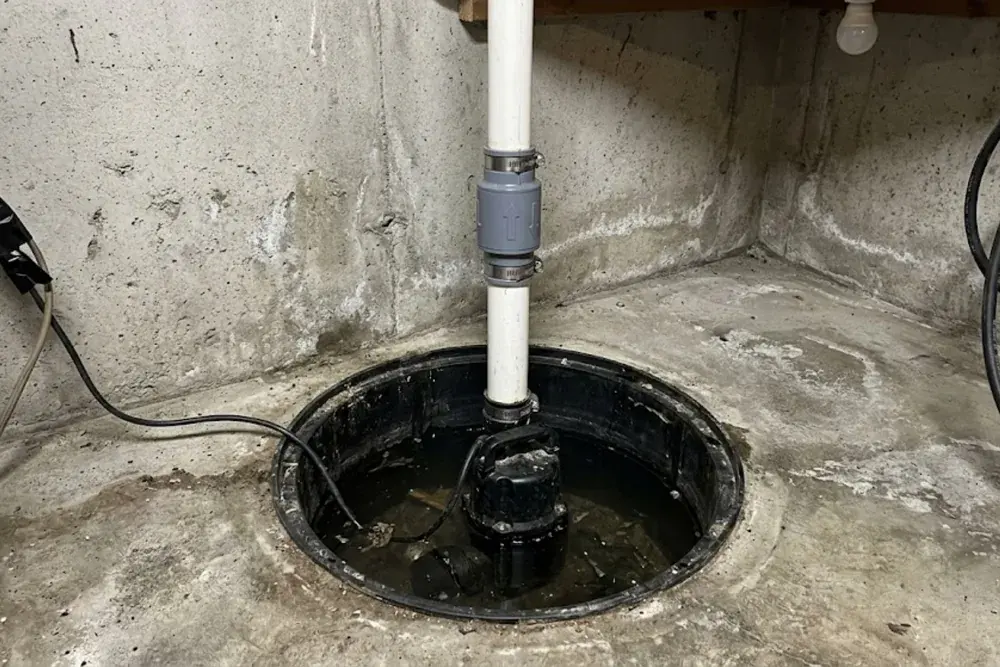
A sump pump sits in a pit in the basement floor and pumps groundwater away from the foundation. Installing one is a modest job in some homes and a significant project in others. This guide breaks down the pieces of an installation price so you can compare quotes.
We leave out dollar figures, because the number depends on the pit, the discharge and the backup you choose. What follows are the pieces and why they matter.
The pump
There are two main types. Submersible pumps sit in the pit, run quietly and handle more water. Pedestal pumps sit above the pit, are easier to service and tend to be less expensive. Motor size is measured in horsepower, and larger motors cost more and move more water.
| Type | Pros | Cons |
|---|---|---|
| Submersible | Quiet, handles debris, long life | Costs more, harder to service |
| Pedestal | Lower price, easy to reach | Louder, shorter life |
| Battery backup pump | Runs during outages | Needs battery maintenance |
| Water-powered backup | No battery needed | Needs municipal water pressure |
The pit
If there is an existing pit, the job is simpler. If not, a plumber cuts the slab, digs a hole, sets a basin and patches the concrete. That adds time, tools and cost. A properly sized pit prevents short cycling.
Want a straight quote?
Call and we outline the job before anyone visits.
Discharge: where the water goes
The pump needs a line to carry water outside, away from the foundation. The length, the route and whether it must run through a wall or rim joist affect cost. A check valve keeps water from falling back into the pit. In winter, the outlet must not freeze shut.
Backup systems
Power often fails during storms. A battery backup or water-powered pump gives you a second line of defense. It costs more but protects against the worst case. We explain how long a battery lasts and what maintenance it needs.
Electrical
A pump needs a dedicated outlet, ideally on a ground fault protected circuit. If none exists, an electrician adds one. Many homeowners forget this until the day of installation.
Choosing the right size
Pump size depends on how fast water enters the pit and how high it must be lifted. A pump that is too small runs constantly and fails early. A pump that is too large short cycles, which wears the switch. Most homes do well with a mid-size motor. Homes with heavy groundwater inflow may need a stronger pump or two pumps.
The vertical distance from the pit to the discharge outlet, called head, matters as much as horsepower. Every extra foot of lift reduces the pump's flow rate. Tell the installer where the line will exit.
Maintenance you should expect
- Test the pump each spring and fall by filling the pit with water
- Clean the pit and intake screen once a year
- Replace a battery backup battery on the maker's schedule
- Check the discharge outlet for ice or blockage in winter
- Replace a pump that is approaching the end of its expected life before a storm
A new pump with a clean pit and a tested backup is a quiet, reliable piece of equipment. It is also the only thing between a storm and your carpet.
Common installation mistakes to avoid
- Discharging near the foundation so water returns to the pit
- Skipping the check valve, which lets water drain back and run the pump again
- Placing the float where it can hit the pit wall
- Using a pit lid that does not seal, letting damp air and radon into the basement
- Plugging the pump into an outlet shared with a freezer or other large load
- Leaving a gravel-filled pit with no basin, which clogs
Each of these is easy to prevent and costly to fix after a storm. Ask the installer how they avoid them.
Checking the work after installation
Before the installer leaves, ask to see the pump run. Pour water into the pit and watch the float rise, the pump start, the water leave and the check valve close. Follow the discharge line outside and make sure water exits freely. Take a photo of the pit and the outlet for your records, and write the install date on the pump with a marker so you know its age.
Put a calendar reminder to test it twice a year.
Finally, ask whether the pump is rated for continuous duty and what its warranty says about commercial or heavy residential use.
What to know in Savage
Savage lies in the Minnesota River valley. The Minnesota River forms the northern border, and the Credit River and Eagle Creek flow north through the city. The Savage Fen Scientific and Natural Area covers more than 400 acres inside the Minnesota Valley National Wildlife Refuge. Basements near these areas are more likely to see seasonal groundwater.
Ask the City of Savage building department about permits and discharge rules for your address before you plan where the pump line will run. Check your plumber's license through the Minnesota Department of Labor and Industry.
Source type: Regional planning agency summary and state agency page
Code and sources
According to the Minnesota Department of Labor and Industry, plumbing work in the state follows Minnesota Rules chapter 4714, which incorporates the 2018 Uniform Plumbing Code with Minnesota amendments. Rules for permits and inspections vary by city, so ask your city's building department what your project needs.
What a quote should include
- Pump brand, horsepower and type
- Pit work, if needed
- Discharge route and check valve
- Backup system, if chosen
- Warranty on pump and labor
For deeper moisture problems see basement waterproofing, and for service on an existing pit see sump pump repair. We install in Savage and in Lakeville and Prior Lake.
Questions Savage homeowners ask
A replacement can take an hour or two. A new pit takes longer.
If power outages and storms coincide in your area, it is worth considering.
Away from the foundation and not onto a neighbor's property.
Those near the river valley, creeks and wetlands can see seasonal rises.
Not always. Drainage and grading may also help.
Still have a question about your situation? The line is open around the clock. Call (952) 866-9120