
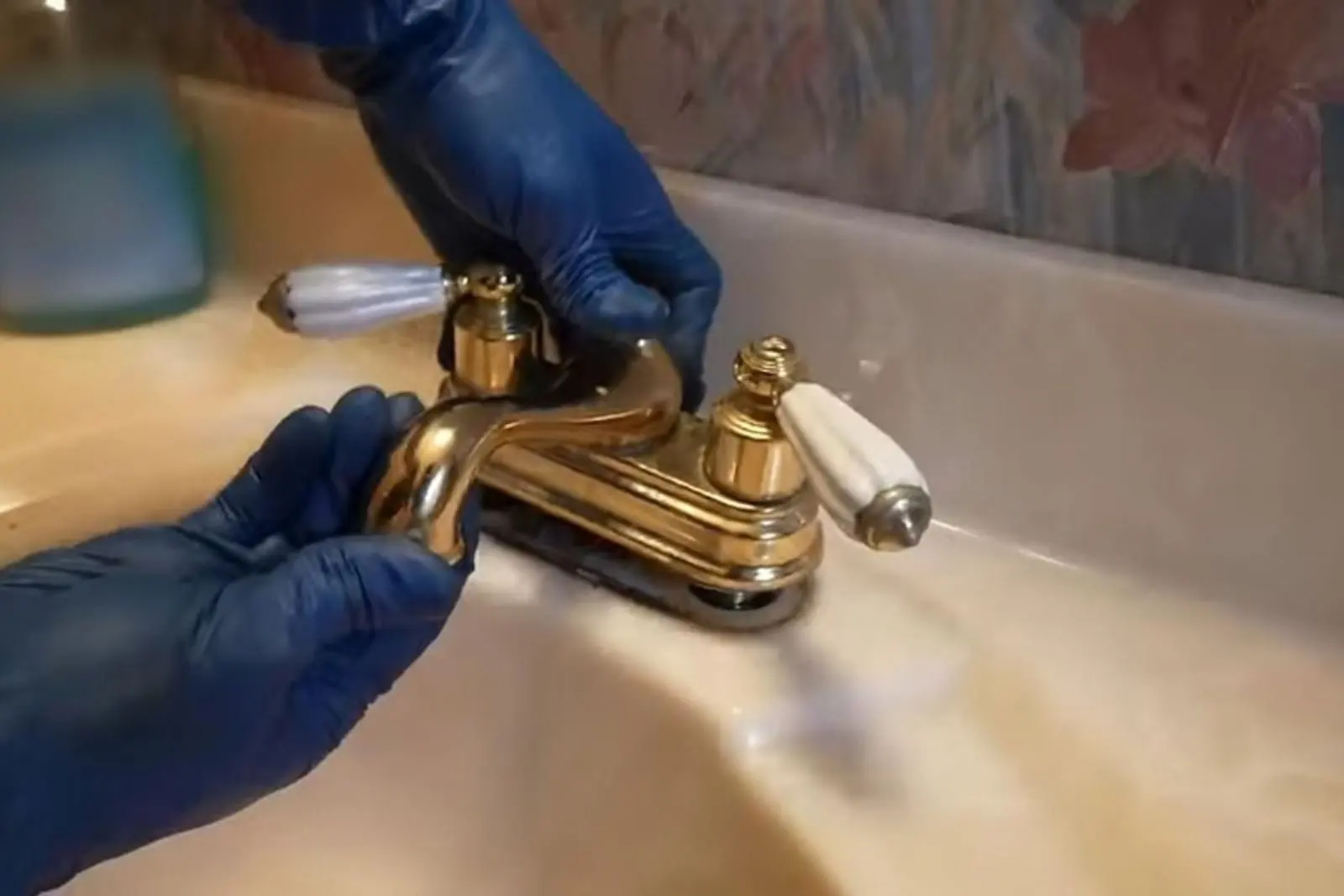
An old faucet can last decades, and many are better built than new ones. They also develop leaks, stiff handles and weak flow. Whether to repair or replace depends on parts, finish and your plans. This guide helps you decide.
What wears out on an old faucet
- Rubber washers and seats in compression faucets
- O-rings in single-handle faucets
- Cartridges, which stiffen with scale
- Aerators clogged by mineral buildup
- Supply lines and shutoff valves under the sink
Most of these are inexpensive to replace. The question is whether the right part exists.
Can you still get parts?
Major brands support their faucets for many years. Small or discontinued brands may not. A plumber can often match a cartridge from a photo or measurements. If you cannot identify the brand, a universal repair kit may not fit.
| Situation | Better choice | Why |
|---|---|---|
| Common brand, drip only | Repair | Parts are cheap and available |
| Corroded body or finish worn off | Replace | Repairs will not fix looks |
| Parts discontinued | Replace | No reliable fix |
| Adding a new sink or countertop | Replace | Fits the new look |
| Low flow from corroded supply | Replace the supply lines or faucet | Clogs are inside |
Want a straight answer?
Call and describe the faucet. We tell you if repair is worth it.
The shutoff valves matter more than the faucet
Under the sink, the small stop valves feed the faucet. Old ones seize and leak. If they do not close, you cannot work on the faucet without shutting the whole house off. Replacing them during a faucet job is cheap insurance.
Hard water and aging fixtures
Scale clogs aerators and wears seals. Soaking an aerator in vinegar often restores flow. A cartridge that has stiffened may only need cleaning. If you find yourself descaling often, a softener solves the root cause.
How to identify an old faucet without a label
Look at the handle shape and mounting. Look under the sink for a model stamp on the underside of the faucet body. Check the supply line threads and the number of holes in the sink. Measure the distance between handle centers on a two-handle faucet. These details narrow a match even for brands that no longer exist.
Take the old cartridge or stem to a plumbing supply counter. Clerks can often match a part by sight.
A repair that is worth doing yourself
- 1
Shut off the water
Close the stop valves under the sink and open the faucet to drain it.
- 2
Plug the drain
A rag keeps small screws out of the pipe.
- 3
Disassemble in order
Handle, cap, retaining nut, stem or cartridge. Photograph each step.
- 4
Clean the seat
Scrape mineral buildup from the valve seat with a soft brush.
- 5
Reassemble and test
Turn the water on slowly and check for drips.
Stop when something does not move. A seized part is a sign to call, because forcing it cracks the body. Replacing a faucet costs more than a repair, but a broken one costs far more.
Vintage and specialty faucets
Some older faucets are worth saving. Heavy brass bodies, porcelain-lever handles and classic wall-mounted designs may look better and last longer than their modern replacements. Reproduction cartridges and washers exist for many of them. If you like the look, tell us. We can often source parts from specialty suppliers or recondition the valve.
If a faucet is a family piece or fits a period house, the repair cost may be worth it even if a new faucet would be cheaper.
Costs to keep in mind
A repair is usually small. A replacement adds the price of the faucet, a new set of supply lines and any parts needed to fit the sink holes. Compare the total to the repair with one extra question: how long do you expect to keep the sink and countertop? If a kitchen remodel is two years away, repair now and replace later.
One more practical point: take a photo of the faucet and the shutoff valves before you call anyone. A clear picture saves a wasted trip and speeds the quote.
What to know in Savage
Savage buys about 71.5 percent of its distributed water from Burnsville, and Burnsville's 2025 report states hardness of 25 to 26 grains per gallon. Savage's own report does not list hardness, so test your tap. Hard water is why faucets in this area scale up quickly.
The Savage Depot, the Hamilton District and the older blocks near Highway 13 have homes with fixtures from several eras. When a house has been remodeled in stages, you may find faucets of different ages in one home.
Source type: City water report and city history page
Code and sources
Under the Minnesota Department of Labor and Industry, the governing standard is Minnesota Rules chapter 4714, built on the 2018 Uniform Plumbing Code with state amendments. This page is general information, not a code review of your home, and your city building department answers permit questions.
A quick decision path
- 1
Identify
Find the brand and model, or take a photo.
- 2
Check availability
Ask a plumber or supplier if parts exist.
- 3
Weigh the cost
Compare repair and replacement.
- 4
Check the valves
Replace stop valves if they are old.
- 5
Decide
Repair if the faucet is sound. Replace if it is not.
Our toilet repair page covers the other fixture most often fixed beside the faucet. We work in Savage and in Prior Lake and Shakopee.
Questions Savage homeowners ask
Usually yes. New washers and seats often solve the drip.
Sometimes. They fit common types. Matching the brand is better.
A clogged aerator or a partly closed stop valve is the common cause.
Yes. Scale builds in aerators and cartridges.
If they are old braided or rubber lines, yes, as cheap insurance.
Still have a question about your situation? The line is open around the clock. Call (952) 866-9120