
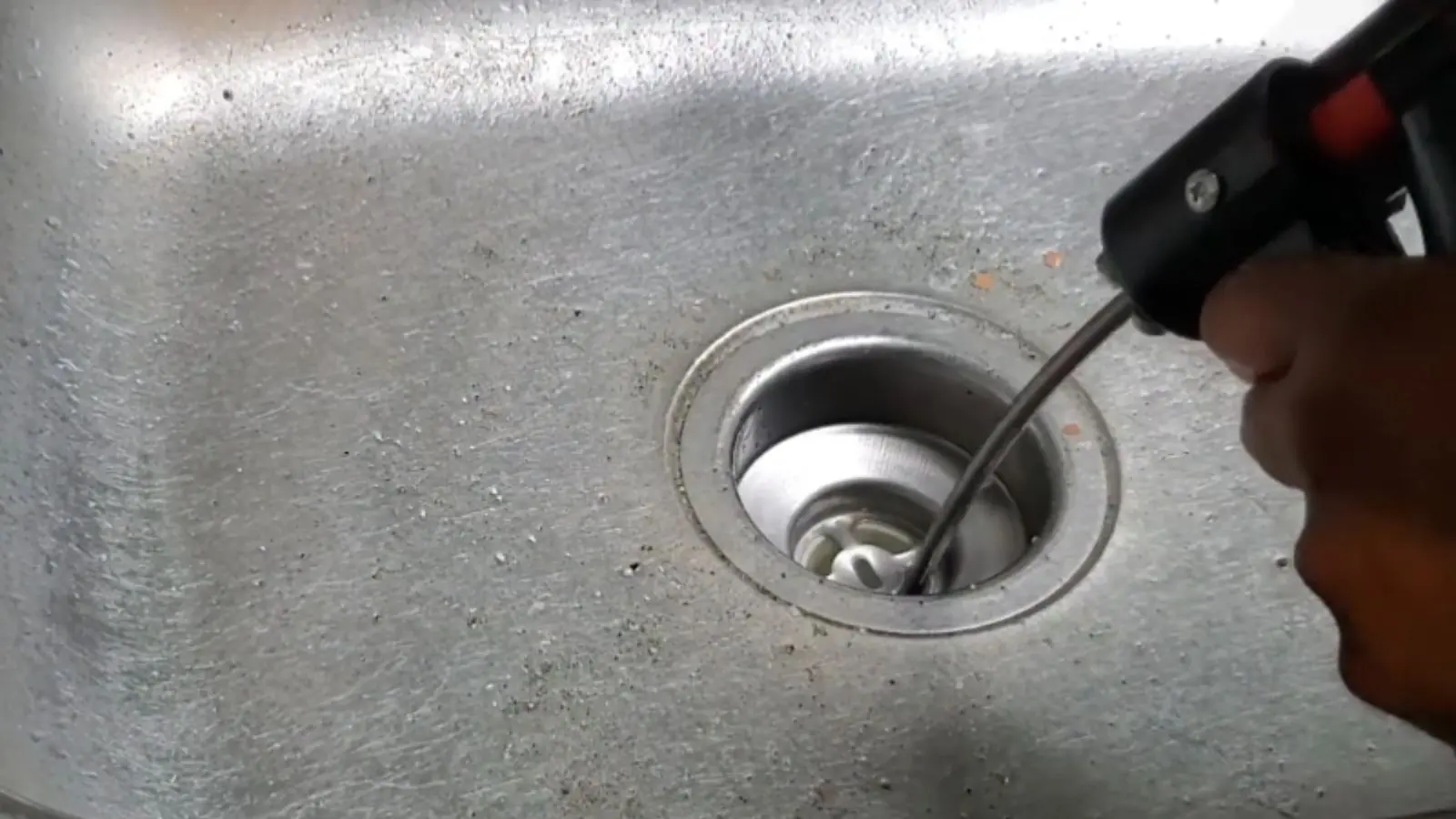
Vinegar and baking soda are the best known home remedy for a slow drain. They are cheap, safe for most pipes and a reasonable first step for a minor clog. They are not a fix for a serious blockage. This guide covers what the mixture does, how to use it and where it stops working.
What the fizz actually does
Baking soda and vinegar react and produce carbon dioxide and water. The fizzing loosens light residue near the opening. It does not dissolve a hairball or cut through a plug of grease deep in the pipe.
In practice, the mix helps with odors and light buildup in a trap. It does little for a tub that is draining slowly because of a hair clog.
How to use it
- 1
Remove standing water
Bail out the sink or tub so the mixture can reach the drain.
- 2
Pour baking soda
About half a cup down the drain.
- 3
Add vinegar
About half a cup of white vinegar. Cover the drain.
- 4
Wait
Let it sit for fifteen to thirty minutes.
- 5
Flush with hot water
Use very hot tap water, not boiling, for plastic pipes.
Do not mix vinegar with bleach or other cleaners. The combination releases harmful gas.
| Clog | Vinegar and baking soda | Better choice |
|---|---|---|
| Light soap film or odor | Helpful | Same |
| Hair in a tub drain | Weak | Hair tool or small auger |
| Grease in a kitchen line | Limited | Hot water, cable, jetting |
| Tree roots | None | Cable and jetting |
| Toilet clog | None | Plunger or closet auger |
Tried vinegar and it still won't drain?
Call and we clear it with the right tool.
Boiling water: be careful
Boiling water can soften grease but may crack a porcelain sink or soften PVC joints. Use very hot tap water instead. Never pour boiling water on a drain that is already full of standing water or on a toilet.
When to stop and call
- More than one fixture is slow
- Water backs up in a floor drain or tub
- The drain gurgles
- The clog returns within days
- You have used chemicals and the drain is still blocked
Chemical drain cleaners are a different matter. They can burn skin, damage old pipes and make the clog harder to remove. If you used one, tell the plumber.
Other safe first steps
- A cup plunger on a sink or tub, with the overflow blocked by a wet rag
- A plastic hair-snake tool for tub drains, which pulls out matted hair
- Dish soap and very hot tap water for a grease slow-down in the kitchen
- Removing and cleaning the P-trap under the sink with a bucket below
- A small hand auger for clogs past the trap
Each of these removes the clog instead of dissolving a corner of it. Hair and grease are the culprits, and both respond better to mechanical removal than to fizz.
Why the pipes keep clogging
A drain is a slope. Anything that sticks to the wall narrows the passage and catches more. Soap scum, hair, mineral scale and grease build a rough layer that traps debris. Hot water and dish soap soften grease briefly, and the grease re-hardens farther down the line.
That is why a repeat clog deserves a real cleaning. A camera, a cable or a jet clears the wall, not just the center of the pipe. If you have cleared the same drain more than twice this year, stop treating the symptom.
Kitchen versus bathroom clogs
Kitchen clogs are mostly grease and food. Heat helps for a short time, and a cable or a jet clears what is left. Bathroom clogs are mostly hair bound with soap scum. A plastic hair tool or a small auger pulls the mat out in one piece. Vinegar helps with the soap scum but does little to the hair itself.
If a bathtub is the problem, remove the stopper and clean it first. Many slow tubs are caused by hair wound around the stopper mechanism, not a clog in the pipe.
Last, be patient with the process. Give a mixture its full wait time, and do not stack cleaners one on top of another. Chemical combinations in a closed pipe are an avoidable risk.
What to know in Savage
Savage's water is hard. The City buys about 71.5 percent of its distributed water from Burnsville, whose 2025 report states hardness of 25 to 26 grains per gallon. Vinegar dissolves mineral scale, which is why it helps on aerators and showerheads in this area.
Plumbing contractors in Minnesota must be licensed, and the state Department of Labor and Industry has a lookup tool. Check before you hire.
Source type: City water report and state agency page
Code and sources
According to the Minnesota Department of Labor and Industry, plumbing work in the state follows Minnesota Rules chapter 4714, which incorporates the 2018 Uniform Plumbing Code with Minnesota amendments. Rules for permits and inspections vary by city, so ask your city's building department what your project needs.
A better routine
A hair catcher in the shower, a strainer in the kitchen and a habit of running hot water after washing dishes prevent most clogs. A monthly vinegar rinse helps keep odors down. Every few years, a professional cleaning of a main line can prevent a backup.
We clear drains through drain cleaning visits across Savage and in Burnsville and Prior Lake. For a stubborn main, ask about hydro jetting.
Questions Savage homeowners ask
In small amounts, it is safe for most pipes. Do not use it often on old metal pipes.
Half a cup of each is a common starting point.
Not for PVC or porcelain. Use hot tap water.
Yes, on aerators and showerheads. It does not clear a clog.
A cable or small auger is the next step, or call a plumber.
Still have a question about your situation? The line is open around the clock. Call (952) 866-9120